
Crypto markets never sleep, and their velocity makes human-only trading increasingly impractical. That’s why modern desks rely on AI-driven trading systems that digest massive streams of noisy information and convert them into split-second decisions. Understanding how AI trading works in crypto starts with a clear view of the data pipelines, model architectures, and execution logic that turn probabilities into positions. Unlike discretionary strategies, AI methodologies can be systematically tested, governed, and refined—aiming to improve consistency while controlling risk. In practice, the difference between a profitable strategy and a costly one often comes down to the quality of inputs, the robustness of learning frameworks, and the rigor of monitoring once models go live. The following sections unpack the stack: data and modeling, signal-to-execution mechanics, and the risk controls that keep systems resilient in 24/7 markets.
The AI stack behind crypto trading: data, features, and models
Everything begins with data. Crypto AI platforms aggregate tick-level order book updates, trades, funding rates, perpetual swap basis, implied volatility, on-chain flows, whale wallet movements, and cross-exchange spreads. They enrich those feeds with derived features such as order book imbalance, momentum across multiple horizons, volatility-of-volatility, liquidity concentration, and mean-reversion scores. Natural language processing (NLP) layers ingest news, protocol governance posts, and social sentiment, converting text into vector embeddings that capture tone and topic relevance. Data engineering normalizes timestamp precision, aligns different venues and networks, and removes outliers, while labeling frameworks define what a “target” means (e.g., next-5-minute return, probability of a 1% adverse move, or breakout likelihood).
At the modeling level, platforms typically combine supervised learning (predicting returns, volatility, or directional moves) with reinforcement learning (optimizing actions such as when to enter, size, hedge, or exit). Tree-based ensembles excel at handling tabular market features and non-linear interactions; recurrent or transformer architectures help capture sequence dynamics in time series; graph neural networks can model relationships across assets, exchanges, and on-chain entities. The best results often come from ensembles and model stacking, where specialized models vote or feed a meta-learner that blends signals based on current market regimes (ranging from high-volatility liquidation cascades to low-volatility carry conditions). Feature selection and regularization reduce overfitting, while cross-validation and walk-forward testing simulate real-world performance.
Crucially, the AI stack encodes uncertainty. Outputs are not certainties but probabilistic forecasts (e.g., the odds of a move, expected slippage, or downside tail risk). Decision layers transform those probabilities into actionable signals using thresholds that adapt to liquidity and risk budgets. For a deeper look at how AI trading works in crypto, consider how these probabilities pass through position-sizing rules and hedging logic before any order is transmitted. This discipline matters because crypto microstructure is fragmented across centralized and decentralized venues, where execution costs, queues, and gas fees can change instantly. The ability to quantify, compare, and rebalance model signals in real time is what gives AI its edge in an always-on market.
From signal to execution: turning predictions into fills
Predictive power is only as good as the execution that follows. Once an AI system produces a signal—say a long bias in BTC with a defined confidence—the execution layer decides how to access liquidity. It may use smart order routing to scan multiple centralized exchanges for the best price-depth combination and to avoid toxic liquidity pockets. For decentralized exchanges, it estimates price impact and gas costs, possibly splitting trades across automated market makers and aggregators. Algorithms such as TWAP, VWAP, POV, and liquidity-seeking sprays are selected based on conditions: low-liquidity hours might require passive posting to minimize slippage, while fast-moving breakouts call for aggressive taking to avoid missing the move.
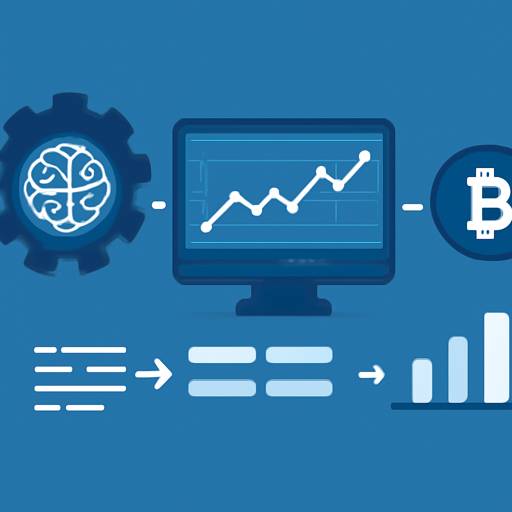
Position sizing translates signal strength and forecast uncertainty into notional exposure. Advanced frameworks use risk parity, volatility targeting, or fractional Kelly criteria while imposing hard caps per asset, venue, and correlation cluster. Hedging logic can neutralize adverse basis risk by pairing spot with perpetual swaps or options, or by balancing across correlated assets to dampen idiosyncratic shocks. Real-time controls continuously re-estimate slippage, queue position, and latency, adjusting tactics mid-flight—cancelling and reposting orders, or pivoting between venues to capitalize on fleeting spreads. In practice, nanosecond decisions compound into meaningful basis points of improved execution quality.
Transaction cost analysis (TCA) closes the loop. The AI evaluates whether fills met benchmarks (e.g., slippage vs. arrival price, execution vs. market drift), then feeds the outcomes back into learning modules. This is where the “self-improving” nature of machine learning shines: the system refines its routing preferences, updates microstructure features, and recalibrates aggression levels by time-of-day and volatility regime. A practical example: during a volatility spike, the model detects widening spreads and switches from market-taking to iceberg limit orders, reducing footprint while maintaining participation. Over thousands of trades, these incremental decisions—grounded in data rather than intuition—shape more stable, risk-adjusted performance.
Governance, transparency, and risk: what keeps AI trading resilient
Crypto’s speed and fragmentation demand more than clever models; they require governance and guardrails. Professional platforms run layered validations: historical backtests with transaction cost modeling; walk-forward optimization to avoid overfitting; and paper trading to assess live market microstructure without capital at risk. Once live, strategies are deployed with progressive capital scaling, fail-safes, and circuit breakers. Regime detectors watch for conditions where a model underperforms—illiquidity, exchange outages, extreme funding dislocations—and trigger de-risking or strategy rotation. Behavioral analytics and explainability tools (e.g., SHAP values) help quantify which features drive decisions, improving trust and enabling human oversight.
Security and compliance are foundational. Institutional-grade setups segregate duties between strategy engines, risk controllers, and settlement. API keys, withdrawals, and wallet operations are protected by MPC or HSM-backed key management with policy-based approvals. On-chain strategies incorporate MEV-aware routing to reduce adverse selection. From a regulatory lens, robust KYC/AML, audit trails, and model-change logs are essential, particularly in jurisdictions like New York where expectations for custody, disclosures, and operational resilience are high. This infrastructure doesn’t just satisfy oversight; it meaningfully reduces operational risk, a key determinant of long-term outcomes in a 24/7 market.
Ongoing monitoring transforms AI from a one-off model into a living system. Telemetry dashboards track latency, error rates, fill ratios, and risk utilization versus limits in real time. A/B or multi-armed bandit frameworks allocate flow among competing strategies, promoting those with superior recent risk-adjusted performance while deprioritizing laggards. Incident playbooks define how to respond to exchange disruptions, depegs, or oracle failures—shifting exposure, unwinding positions, or pausing modules until data quality recovers. Consider a case where a cross-exchange basis widens sharply during a macro shock: governance rules may throttle leverage, switch to hedged relative-value trades, and tighten stop-loss tolerances. These disciplined responses, codified in advance, illustrate how AI trading in crypto is as much about process integrity as it is about predictive accuracy.

Quito volcanologist stationed in Naples. Santiago covers super-volcano early-warning AI, Neapolitan pizza chemistry, and ultralight alpinism gear. He roasts coffee beans on lava rocks and plays Andean pan-flute in metro tunnels.

Leave a Reply